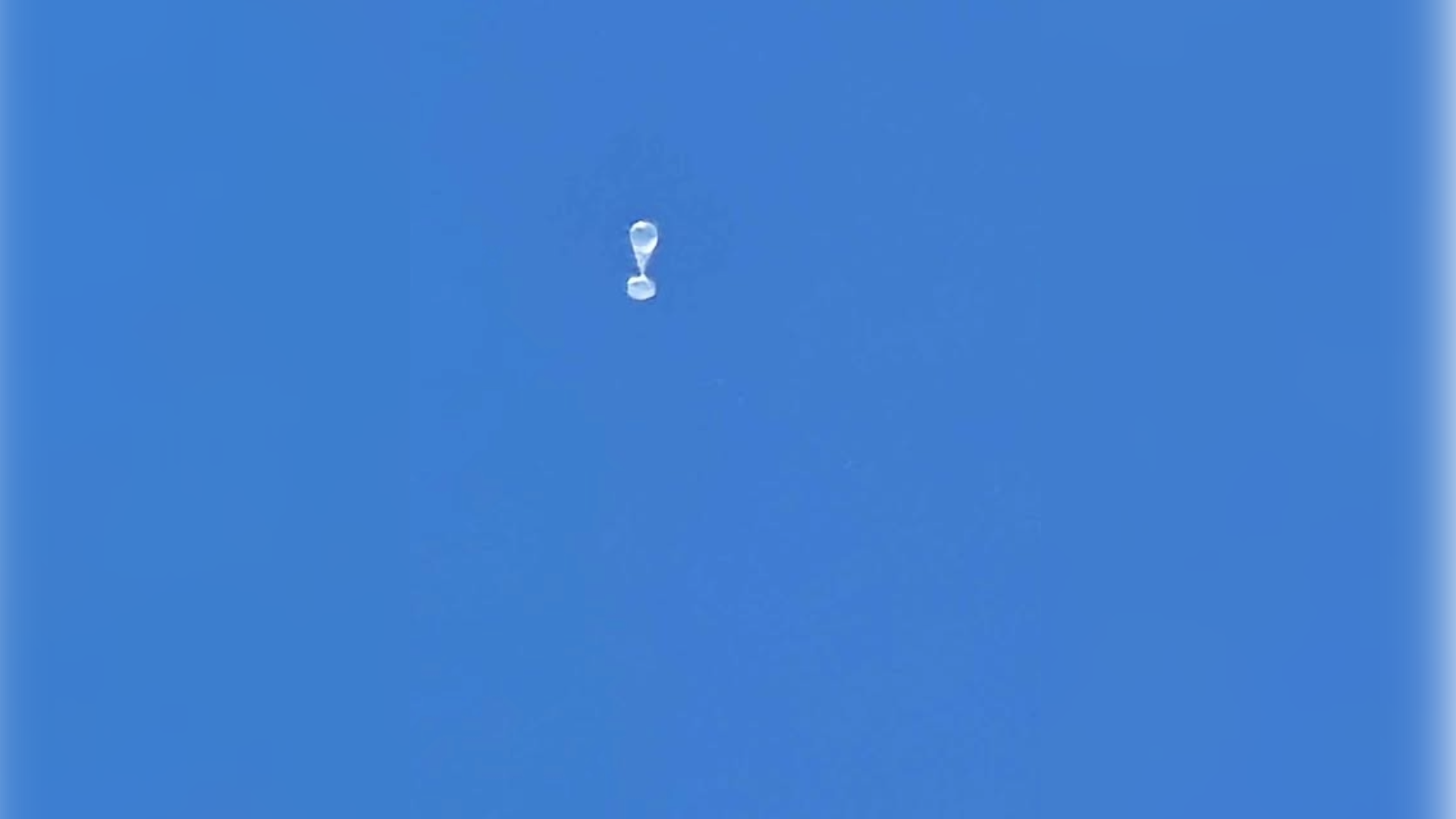
On Monday afternoon, a curious sight captured the attention of residents across Southwest Florida: a large object gracefully floating in the sky. The WINK Weather Authority was on the case, working diligently to uncover the mystery behind this aerial enigma. Numerous inquiries poured in from concerned viewers eager to identify the unusual presence. WINK News promptly reached out to World View, a company based in Arizona that operates high-altitude stratospheric balloons.
While the balloon garnered significant attention in Southwest Florida, it was revealed that this particular flight had commenced the previous Tuesday. The balloon’s intended destination was the Atlantic Ocean. World View confirmed that they were operating the balloon for a client engaged in communications testing over the vast expanse of the Atlantic.

The stratospheric balloon is designed to operate at impressive altitudes, soaring between 55,000 and 75,000 feet. This altitude places it well above the flight paths of commercial aircraft, ensuring it poses no risk to air traffic. The company maintains complete remote control over the balloon’s operations. However, its trajectory is largely dictated by the prevailing stratospheric winds, making its exact direction and the precise timing of its path inherently unpredictable.
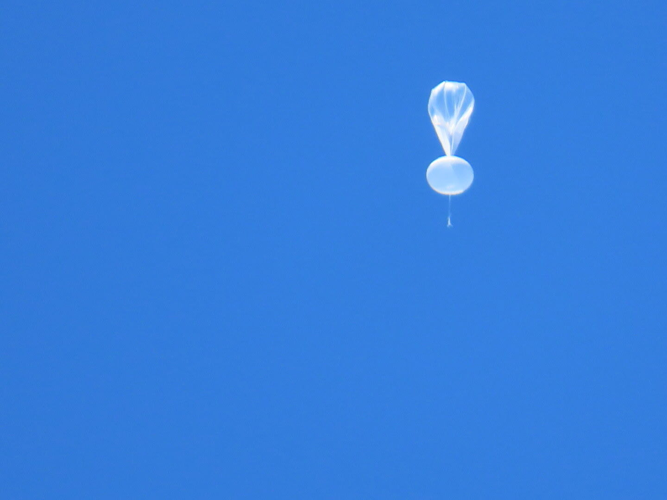
The balloon was observed continuing its eastward trajectory, traversing over Florida. It is possible that the balloon might reappear over the Southwest Florida region as it begins its return journey towards Tucson, Arizona. The journey is a testament to the capabilities of modern stratospheric balloon technology, offering unique platforms for various scientific and commercial applications.
Understanding Stratospheric Balloons
Stratospheric balloons are a fascinating class of lighter-than-air vehicles designed to reach altitudes far beyond those of conventional weather balloons or aircraft. Unlike hot air balloons that rely on heating air to achieve buoyancy, stratospheric balloons are typically filled with lighter gases like helium or hydrogen. They are constructed from specialized materials that can withstand the extreme conditions of the stratosphere, including very low temperatures and reduced atmospheric pressure.
The primary purpose of these balloons is to carry payloads to the edge of space. These payloads can range from scientific instruments for atmospheric research, astronomical observations, and climate monitoring, to sophisticated communication equipment. The extended flight times and stable platform offered by stratospheric balloons make them ideal for long-duration experiments and data collection that would be difficult or impossible to achieve with other methods.
World View and Its Mission
World View is a prominent player in the field of stratospheric ballooning, offering a range of services that leverage this unique technology. The company specializes in providing access to the near-space environment for various applications. Their high-altitude balloon systems are capable of lifting significant payloads to altitudes of up to 100,000 feet and beyond.
The company’s services cater to a diverse clientele, including scientific institutions, government agencies, and commercial enterprises. For scientific research, World View balloons can carry instruments to study Earth’s atmosphere, monitor climate change, and conduct astronomical observations with unparalleled clarity, free from the distortions of Earth’s lower atmosphere.
In the realm of communications, as exemplified by the recent flight, stratospheric balloons can serve as elevated platforms for broadcasting and data transmission. This can be particularly useful in remote areas or for establishing resilient communication networks. The ability to deploy and recover payloads from these altitudes also opens up possibilities for specialized aerial imaging and sensor deployment.
The Science of Stratospheric Flight
The flight of a stratospheric balloon is a complex interplay of physics and meteorology. Once launched, the balloon ascends, expanding as the external atmospheric pressure decreases. The rate of ascent is carefully managed by controlling the amount of lifting gas. As the balloon reaches its target altitude, it enters the stratosphere, a region characterized by stable air and minimal turbulence.
The stratospheric winds, while generally predictable in direction, can vary significantly in speed. These winds become the primary means of propulsion for the balloon. World View’s sophisticated control systems allow for adjustments to the balloon’s altitude, enabling them to navigate through different wind currents and steer the payload towards its desired destination or operational area.
The duration of a stratospheric balloon flight can vary from a few hours to several days, depending on the mission objectives and the balloon’s design. Upon completion of the mission, the payload is typically released from the balloon and descends under a parachute, where it is recovered for data retrieval and analysis.
Navigating the Skies: The Role of Flight Tracking
The sighting of the balloon over Southwest Florida prompted a wave of curiosity, and tools like Flight Aware provide a valuable resource for understanding the movement of aerial objects. Flight tracking services utilize data from various sources, including radar, transponders, and ADS-B signals, to provide real-time information on aircraft and other airborne vehicles.
In the case of stratospheric balloons, their flight paths are often tracked and made publicly available, allowing researchers, enthusiasts, and the general public to follow their journeys. This transparency helps demystify these often-unseen operations and fosters a greater understanding of the technologies being employed. The image captured by Flight Aware likely provided crucial details about the balloon’s observed path over Florida, confirming its westward movement and offering insights into its likely trajectory.
The Future of Stratospheric Exploration
The continued use and development of stratospheric balloon technology signal a growing interest in accessing the near-space environment. As payload capacities increase and control systems become more sophisticated, these balloons are poised to play an even more significant role in scientific research, communication infrastructure, and potentially even future space exploration initiatives. The mystery that unfolded over Southwest Florida serves as a reminder of the incredible advancements being made in our ability to explore and utilize the upper reaches of our atmosphere. The journey of this Arizona balloon across the skies of Florida is a testament to human ingenuity and the ongoing quest for knowledge and innovation.