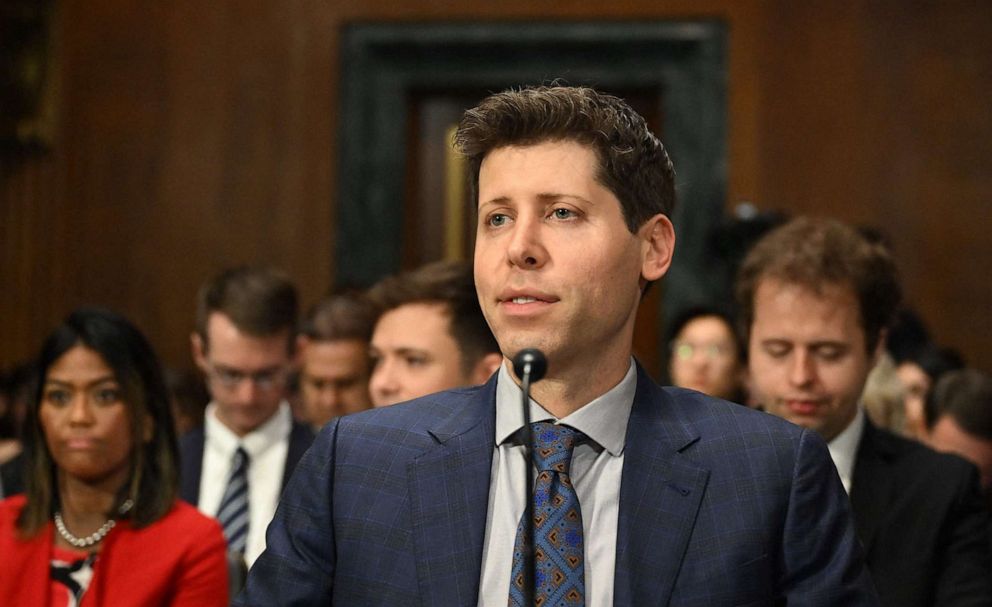
The recent pronouncements from Sam Altman, CEO of OpenAI, at a prominent AI summit in India have ignited a critical discourse surrounding the trajectory of artificial intelligence and its perceived relationship with humanity. Altman’s defense against criticisms regarding the substantial natural resources consumed by generative AI models took an unexpected and, for many, alarming turn. When pressed by a reporter from The Indian Express about the energy demands of training and operating AI, Altman retorted by drawing a parallel between the energy expenditure of AI and the "training" of a human. He argued that it takes "20 years of life and all of the food you eat" to make a human intelligent, and further, that this process is built upon the evolutionary journey of billions of humans who learned to survive and innovate. He then posited that, in terms of energy efficiency for answering a question once a model is trained, AI has likely already caught up to humans.
While Altman’s assertion can be easily dissected on a purely technical level – the human brain’s energy consumption is significantly lower than even efficient AI models for simple queries, and the energy used by devices to interact with AI is also a factor – the more profound issue lies in the underlying philosophy that prompts such a comparison. The true concern with AI’s resource consumption is not merely the energy required for individual queries but its contribution to climate change. Current atmospheric carbon dioxide levels are unprecedented in millions of years, driven not by the natural course of evolution but by contemporary human industrial activity, including the energy-intensive infrastructure supporting AI development, such as the private, gas-fired power plants being established by data centers. This collective energy demand, comparable to that of dozens of major American cities, directly exacerbates the climate crisis.

However, the truly significant aspect of Altman’s statement is his willingness to equate humans and machines. This is not an isolated gaffe but appears to represent a prevalent and calculated perspective within the AI industry. Altman reiterated a similar comparison in a statement to Forbes India at the same summit. Furthermore, Dario Amodei, CEO of Anthropic and a key rival to Altman, recently drew an analogous comparison, likening AI model training to human evolution and daily learning. This anthropomorphic tendency extends into product development, with companies like Anthropic exploring whether their chatbots exhibit consciousness or can experience "distress," and allowing them to terminate conversations deemed "persistently harmful or abusive" due to "risks to model welfare." This explicit anthropomorphization of programs that lack biological needs or inherent will is deeply concerning.

The conviction within AI firms that their products are genuinely comparable to humans, or that such a narrative is effective marketing, presents a dual threat. A genuine belief in building a superior entity, perhaps even a god-like intelligence – a sentiment echoed by Altman’s prediction of superintelligence emerging within a few years – could easily rationalize the marginalization of human well-being and the planet’s health as acceptable collateral damage. Altman’s acknowledgement of the energy consumption problem, attributing it to the widespread adoption of AI, suggests a reliance on renewable energy solutions like nuclear, wind, and solar, without considering the alternative of pacing AI development until these solutions are fully realized.
If Altman’s comparison is merely a public relations strategy, it is one rooted in a profound misanthropy. His audience includes investors, and the narrative of AI labs creating digital life has long served as a convenient myth, particularly as OpenAI reportedly seeks substantial funding at an astronomical valuation. While tech companies may genuinely aspire to develop AI for the betterment of humanity, as per OpenAI’s founding mission, and genuinely believe vast capital is necessary to achieve this, equating the nurturing of a child or the grand arc of human evolution with the development of algorithmic products starkly reveals a disconnect from the essence of human existence.
To "train a human" is to embrace a life of struggle, the acceptance of potential failure, and the serendipitous pursuit of wonder and beauty. Generative AI, conversely, is designed to bypass this process, optimizing for instantaneity, efficiency, and effortlessness. While these tools can undoubtedly serve us, placing them on the same existential plane as organic life is a somber reflection of a civilization seemingly losing its grip on what it truly means to be human. The relentless drive for technological advancement, divorced from a deep understanding and appreciation of the human experience, risks creating a future where humanity is not only overshadowed but fundamentally devalued by its own creations. This anthropocentric framing, where AI is measured against the very fabric of human life, suggests a dangerous convergence where the pursuit of artificial intelligence is inadvertently undermining the very humanity it is ostensibly meant to serve. The implications of this mindset, both in terms of environmental impact and existential philosophy, are profound and demand urgent re-evaluation.